Fire mitigation assessments
A practical site review of tree hazards, vegetation, access, targets and the work that may help reduce wildfire risk.
Homes · acreages · communities
Field-informed wildfire mitigation, danger-tree removal, fuel reduction and burnt-tree remediation for rural homes, acreages, communities and fire-affected stands.
Reduce the available fuel
Many meaningful wildfire-risk reductions are ordinary maintenance jobs a homeowner can complete safely.
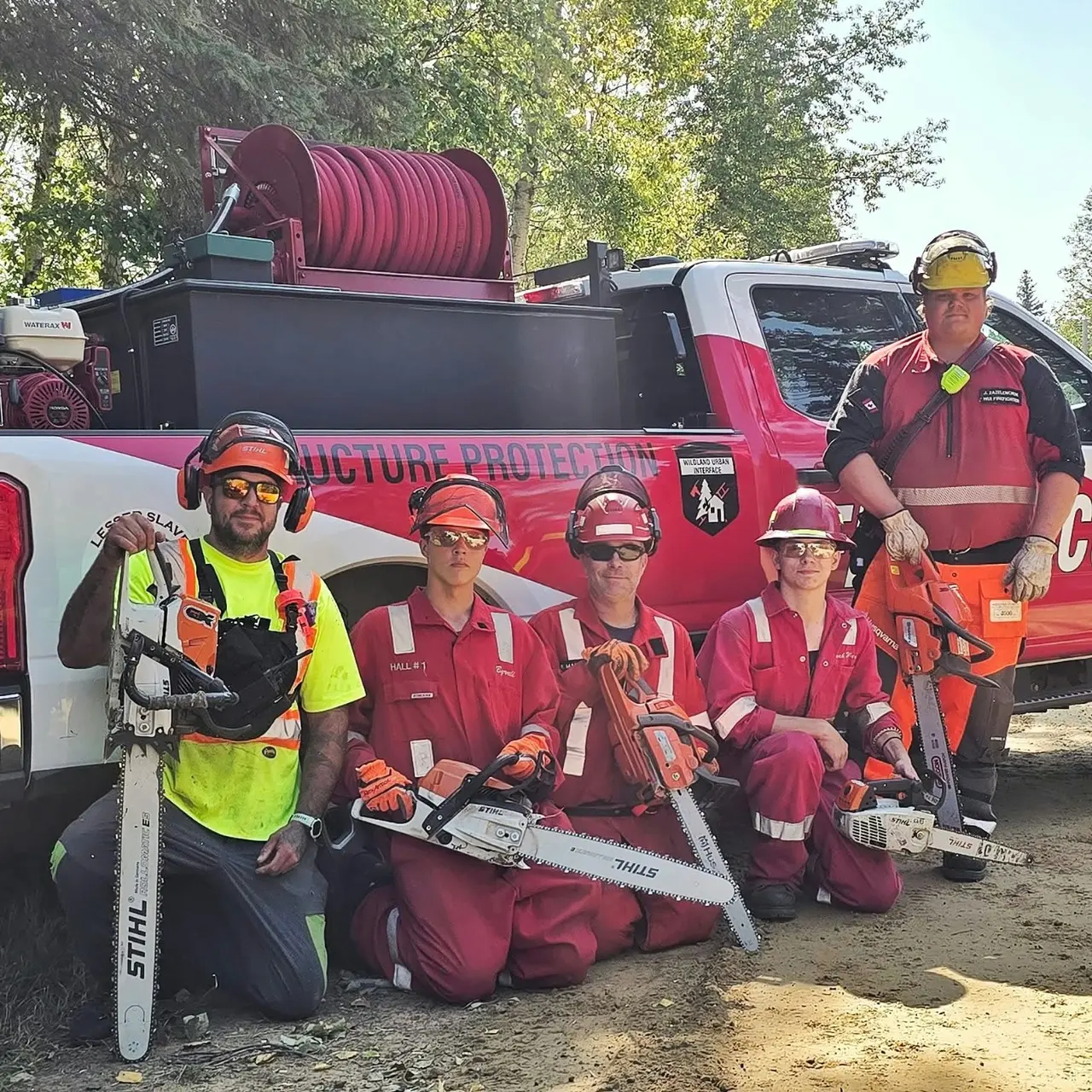
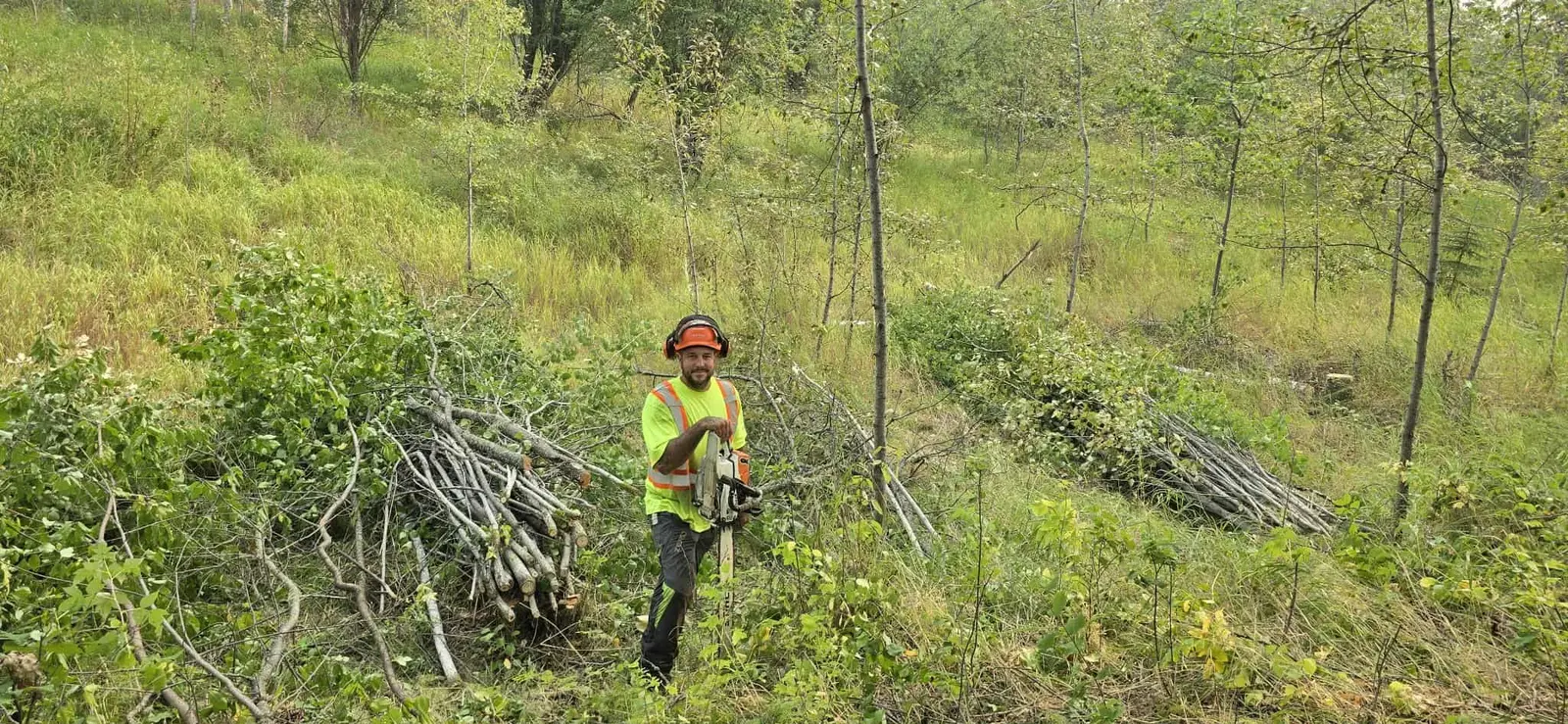
Removing needles from gutters, clearing combustible storage, maintaining grass and managing dead vegetation all matter. Rafter Seven supports the work that becomes larger or more hazardous: dead and compromised trees, dense stands, ladder fuels, substantial deadfall, technical removals and material handling.
A practical site review of tree hazards, vegetation, access, targets and the work that may help reduce wildfire risk.
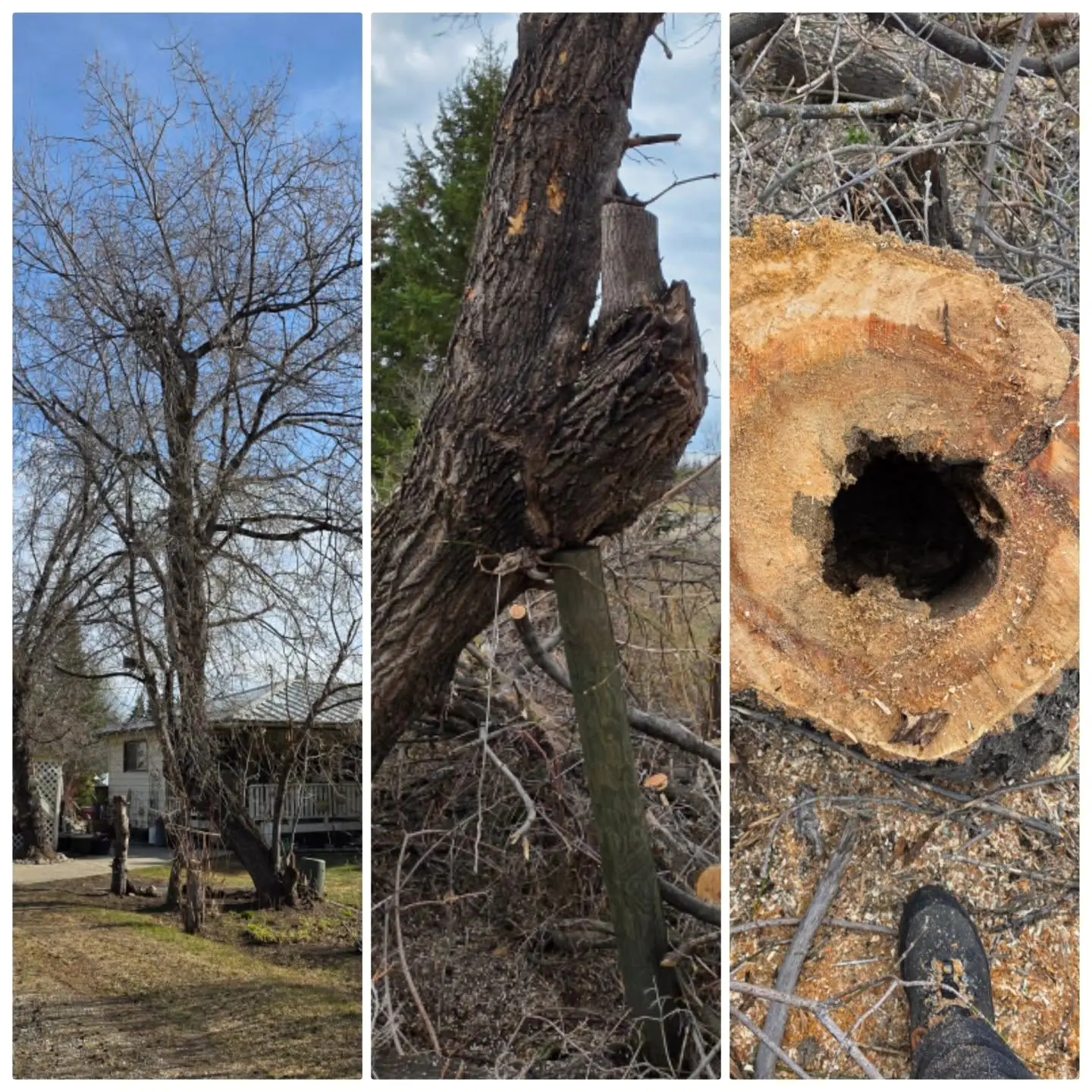
Removal of dead, damaged or compromised trees near homes, access routes, work areas and other targets.
Selective tree and vegetation work designed to interrupt dense or continuous fuels around developed property.
Reducing vegetation arrangements that can carry surface fire upward into shrubs and tree crowns.
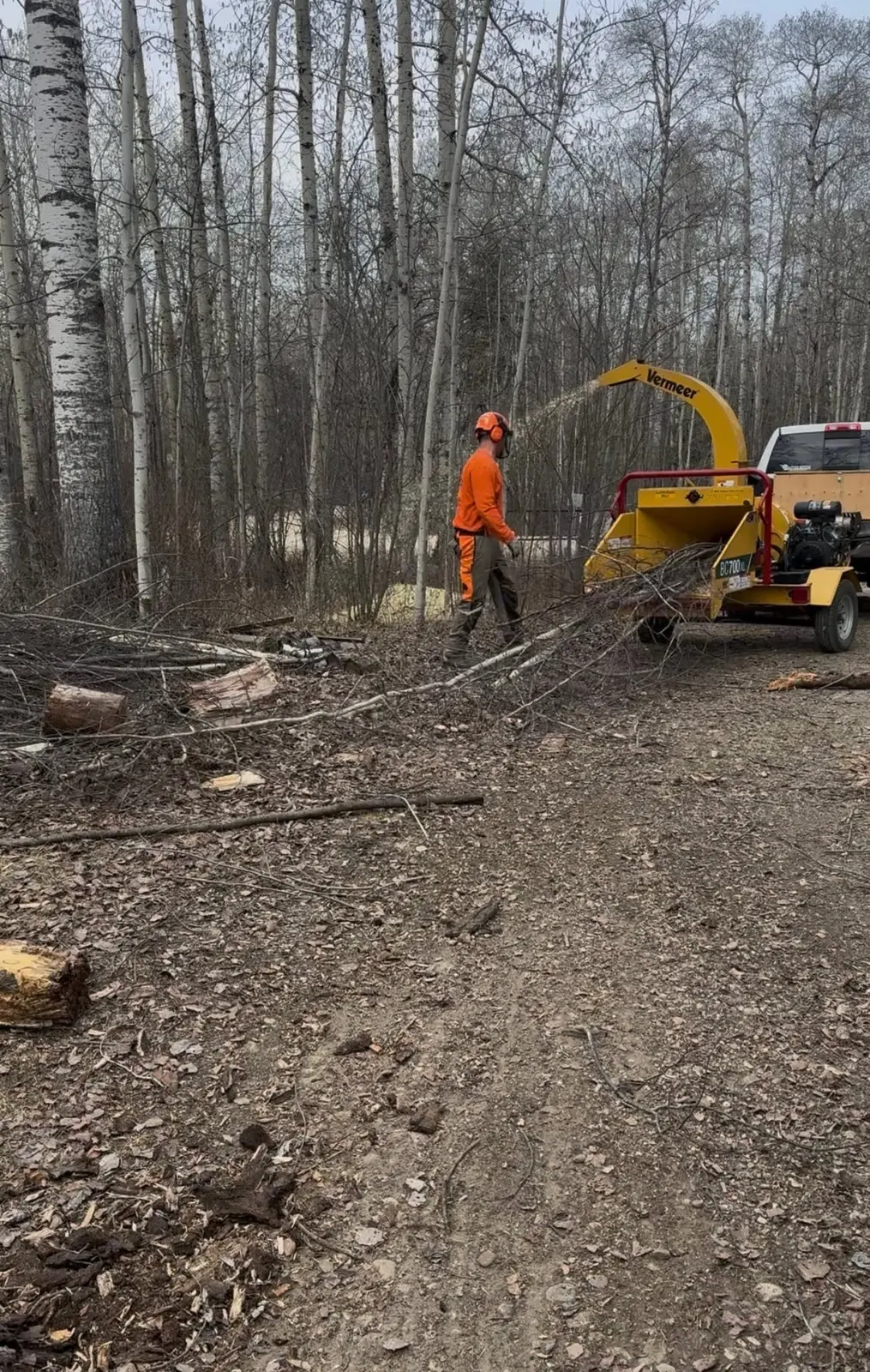
Cutting, bucking, stacking, staging or removal options that match the property and agreed project scope.
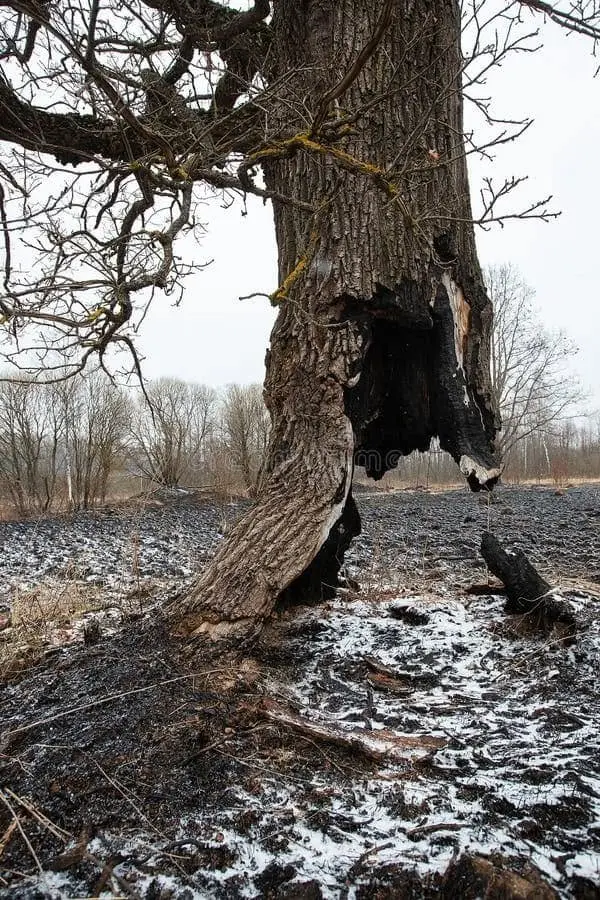
Assessment-led work in fire-affected stands where compromised timber creates new hazards after the fire.
What professional support adds
Property owners know their sites and can accomplish a great deal. A Rafter Seven fire mitigation assessment can help define priorities when tree condition, size, lean, terrain, proximity to structures or the volume of material moves the work beyond safe homeowner capability.
Independent homeowner resources
Build your own plan from FireSmart Canada’s independently published homeowner guidance—not from a generic checklist.
Start at the structure and move through the Home Ignition Zones. Prioritize the work closest to the home, keep combustible debris from accumulating and make landscaping choices that reduce the chance of fire moving continuously toward a building.
FireSmart is a registered trademark of Partners in Protection Association. Rafter Seven Tree Management is independent and is not affiliated with, endorsed by or a representative of FireSmart Canada. Rafter Seven fire mitigation assessments are an independent service—not a FireSmart Canada assessment, program or certification. We link to official resources so homeowners can use current source guidance. Wildfire mitigation can reduce risk; it cannot eliminate it. FireSmart Canada trademark information ↗
“We used Craig to cut down a huge number of trees around our property to be fire safe. He had good advice and was very professional and honest.”
Jennifer Begley · Facebook recommendation
Common questions
No. Mitigation can reduce vulnerability and available fuel, but it cannot eliminate wildfire risk. Follow FireSmart Canada guidance, evacuation instructions and all current local fire restrictions.
Begin with the FireSmart Home Self-Assessment and the zone closest to the structure. Clear combustible debris from roofs, gutters, decks and walls, move stored fuel away and maintain the yard before taking on larger tree work.
Yes. Hazardous and technical tree removal is a core Rafter Seven service. Tree condition, access and nearby targets determine the method.
Branches and logs may be bucked, stacked, staged on site or removed depending on access and the written scope. Forestry mulching can be coordinated through trusted subcontractors when appropriate.
Yes. We welcome municipal, community and public-sector scopes across Alberta, subject to project requirements and availability.
Reduce risk before fire season
Send your location, photos and the outcome you want. We’ll review the site, identify what you can handle and define where our crew can support the work.